> Getting Started with Transformer Models: A Practical Guide
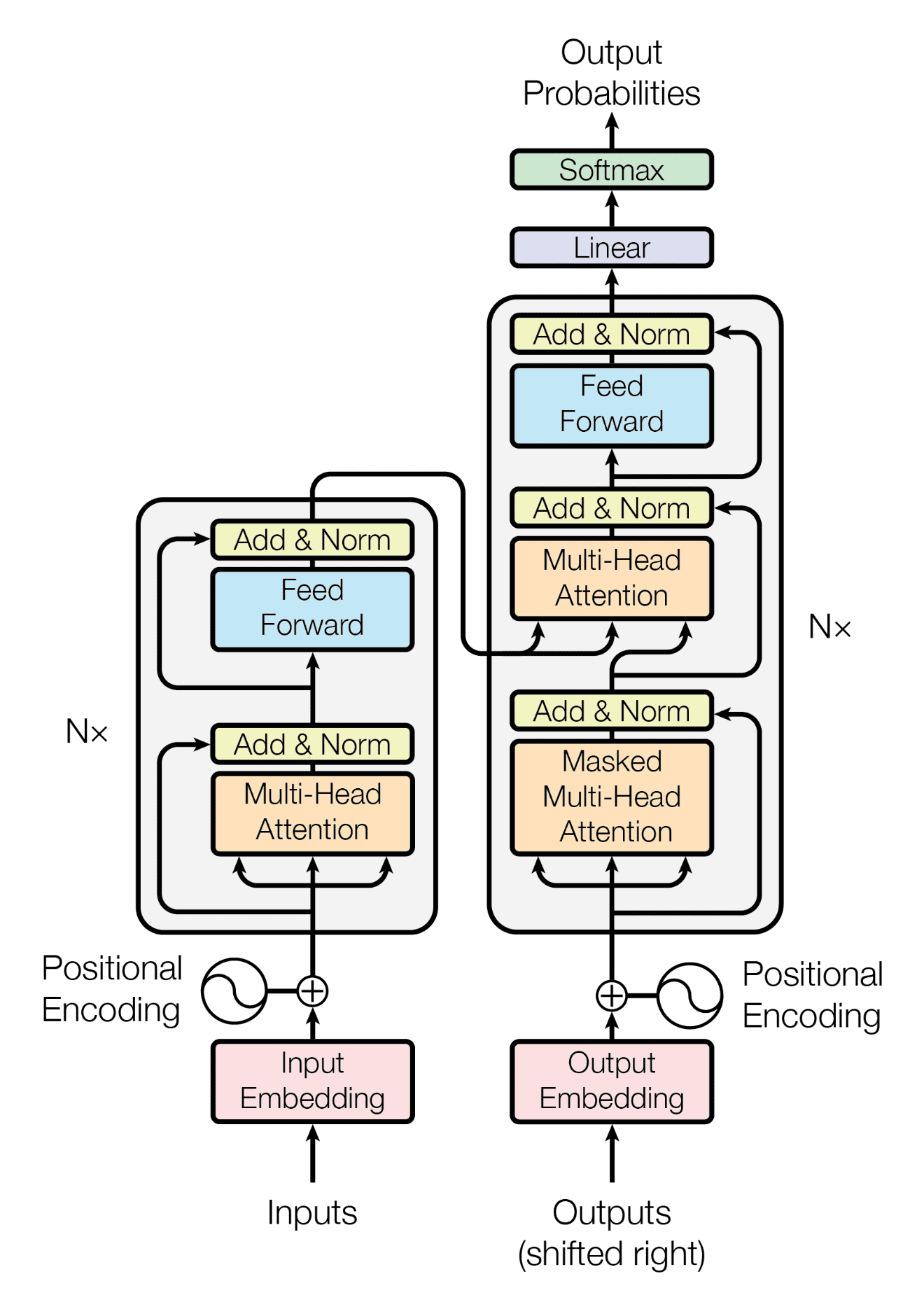
Learn the fundamentals of transformer architecture and how to implement your first transformer-based model for NLP tasks.
When Google researchers published "Attention is All You Need" in 2017, they probably didn't anticipate just how thoroughly transformers would dominate the AI landscape. Today, nearly every state-of-the-art language model from GPT-4 to Claude to Gemini is built on transformer architecture. If you are working in NLP or planning to, understanding transformers isn't optional anymore. It's foundational.
This guide walks you through the core concepts and gets you building with transformers quickly.
Why Transformers Replaced RNNs
Before transformers, recurrent neural networks (RNNs) and their variants (LSTMs, GRUs) were the go to architecture for sequential data. They had a fundamental limitation, they processed tokens one at a time, passing hidden states forward sequentially.
This created two major problems. First, training was slow because you couldn't parallelize, each step depended on the previous one. Second, long range dependencies were difficult to capture. By the time the model reached the end of a long sentence, information from the beginning had often degraded.
Transformers solved both problems by processing all tokens simultaneously through self-attention. The result models that train faster on modern GPUs and capture relationships between words regardless of their distance in the text.
The Core Mechanism: Self-Attention
Self-attention is what makes transformers work. The intuition is simple: when processing a word, the model should be able to "look at" other words in the sentence to understand context.
Consider the sentence: "The cat sat on the mat because it was tired."
What does "it" refer to? A human immediately knows it's the cat, not the mat. Self-attention lets the model make this connection by computing attention scores between "it" and every other word, learning that "it" should attend strongly to "cat."
Mathematically, self-attention computes three vectors for each token:
- Query (Q): What am I looking for?
- Key (K): What do I contain?
- Value (V): What information do I pass along?
The attention score between tokens is the dot product of the query and key, scaled and passed through softmax. This score determines how much each token's value contributes to the output.
import torch
import torch.nn.functional as F

def scaled_dot_product_attention(Q, K, V):
    """
    Q, K, V: tensors of shape (batch, seq_len, d_k)
    """
    d_k = Q.size(-1)

    # Compute attention scores
    scores = torch.matmul(Q, K.transpose(-2, -1)) / torch.sqrt(torch.tensor(d_k, dtype=torch.float32))

    # Apply softmax to get attention weights
    attention_weights = F.softmax(scores, dim=-1)

    # Multiply by values
    output = torch.matmul(attention_weights, V)

    return output, attention_weights
Multi-Head Attention: Learning Different Relationships
A single attention mechanism can only capture one type of relationship. Multi-head attention runs several attention operations in parallel, each with different learned projections. One head might learn syntactic relationships, another semantic ones, and so on.
import torch.nn as nn

class MultiHeadAttention(nn.Module):
    def __init__(self, d_model, num_heads):
        super().__init__()
        self.num_heads = num_heads
        self.d_k = d_model // num_heads

        self.W_q = nn.Linear(d_model, d_model)
        self.W_k = nn.Linear(d_model, d_model)
        self.W_v = nn.Linear(d_model, d_model)
        self.W_o = nn.Linear(d_model, d_model)

    def forward(self, x):
        batch_size, seq_len, d_model = x.size()

        # Linear projections and reshape for multi-head
        Q = self.W_q(x).view(batch_size, seq_len, self.num_heads, self.d_k).transpose(1, 2)
        K = self.W_k(x).view(batch_size, seq_len, self.num_heads, self.d_k).transpose(1, 2)
        V = self.W_v(x).view(batch_size, seq_len, self.num_heads, self.d_k).transpose(1, 2)

        # Attention
        scores = torch.matmul(Q, K.transpose(-2, -1)) / (self.d_k ** 0.5)
        attention = F.softmax(scores, dim=-1)
        context = torch.matmul(attention, V)

        # Concatenate heads and project
        context = context.transpose(1, 2).contiguous().view(batch_size, seq_len, d_model)
        return self.W_o(context)
Positional Encoding: Adding Sequence Information
Since transformers process all tokens in parallel, they have no inherent sense of word order. "The dog bit the man" and "The man bit the dog" would look identical without positional information.
The original transformer paper used sinusoidal positional encodings — fixed patterns of sines and cosines at different frequencies. Modern models often use learned positional embeddings instead, or relative position encodings like RoPE (Rotary Position Embedding).
import math

class PositionalEncoding(nn.Module):
    def __init__(self, d_model, max_len=5000):
        super().__init__()

        pe = torch.zeros(max_len, d_model)
        position = torch.arange(0, max_len, dtype=torch.float).unsqueeze(1)
        div_term = torch.exp(torch.arange(0, d_model, 2).float() * (-math.log(10000.0) / d_model))

        pe[:, 0::2] = torch.sin(position * div_term)
        pe[:, 1::2] = torch.cos(position * div_term)

        self.register_buffer('pe', pe.unsqueeze(0))

    def forward(self, x):
        return x + self.pe[:, :x.size(1)]
Building Your First Transformer Pipeline
Let's move from theory to practice. The Hugging Face transformers library makes it easy to use pre-trained models:
from transformers import pipeline, AutoTokenizer, AutoModel

# Quick start: Use pipelines for common tasks
classifier = pipeline("sentiment-analysis")
print(classifier("This tutorial is really helpful!"))
# Output: [{'label': 'POSITIVE', 'score': 0.9998}]

# Text generation
generator = pipeline("text-generation", model="gpt2")
print(generator("Transformers are powerful because", max_length=50, num_return_sequences=1))

# Named Entity Recognition
ner = pipeline("ner", grouped_entities=True)
print(ner("Hugging Face is based in New York City."))
# Output: [{'entity_group': 'ORG', 'word': 'Hugging Face', ...},
#          {'entity_group': 'LOC', 'word': 'New York City', ...}]
Fine-Tuning a Transformer for Your Task
Pre-trained models are useful, but the real power comes from fine-tuning on your specific data:
from transformers import AutoModelForSequenceClassification, Trainer, TrainingArguments
from datasets import load_dataset

# Load a dataset
dataset = load_dataset("imdb")

# Load pre-trained model and tokenizer
model_name = "distilbert-base-uncased"
tokenizer = AutoTokenizer.from_pretrained(model_name)
model = AutoModelForSequenceClassification.from_pretrained(model_name, num_labels=2)

# Tokenize the dataset
def tokenize_function(examples):
    return tokenizer(examples["text"], padding="max_length", truncation=True, max_length=512)

tokenized_datasets = dataset.map(tokenize_function, batched=True)

# Set up training
training_args = TrainingArguments(
    output_dir="./results",
    evaluation_strategy="epoch",
    learning_rate=2e-5,
    per_device_train_batch_size=16,
    num_train_epochs=3,
    weight_decay=0.01,
)

trainer = Trainer(
    model=model,
    args=training_args,
    train_dataset=tokenized_datasets["train"].shuffle(seed=42).select(range(5000)),  # Subset for demo
    eval_dataset=tokenized_datasets["test"].shuffle(seed=42).select(range(1000)),
)

# Train
trainer.train()
Practical Tips for Working with Transformers
Start small. Don't jump to the largest model available. DistilBERT or a small GPT-2 can help you validate your approach quickly before scaling up.
Watch your memory. Transformer memory usage scales quadratically with sequence length due to the attention mechanism. For long documents, consider models with efficient attention variants like Longformer or use chunking strategies.
Learning rate matters. Transformers are sensitive to learning rate. Start with 1e-5 to 5e-5 for fine-tuning pre-trained models. Use learning rate warmup for the first few hundred steps.
Don't ignore tokenization. How text gets split into tokens significantly affects model behavior. Always use the tokenizer that matches your model mixing tokenizers is a common source of bugs.
Choosing the Right Model
Not all transformers are created equal. Here's a quick guide:
For understanding text (classification, NER, question answering): Use encoder models like BERT, RoBERTa, or DeBERTa. They're bidirectional and excel at tasks requiring deep text comprehension.
For generating text (chatbots, content creation, code): Use decoder models like GPT, LLaMA, or Mistral. They're autoregressive and optimized for generation.
For translation or summarization: Encoder-decoder models like T5, BART, or mBART handle sequence-to-sequence tasks well.
What's Next
Once you're comfortable with the basics, explore these directions:
- Parameter-efficient fine-tuning: Techniques like LoRA let you fine-tune large models with minimal compute by only training small adapter layers.
- Quantization: Reduce model size and speed up inference with 8-bit or 4-bit quantization.
- Retrieval-augmented generation (RAG): Combine transformers with external knowledge bases for more accurate, grounded responses.
- Multimodal transformers: Models like CLIP and LLaVA extend transformer architecture to handle both text and images.
Transformers aren't just another architecture, they're the foundation of modern AI. The concepts you've learned here (self-attention, positional encoding, the encoder decoder paradigm) will serve you well as you dive deeper into language models, vision transformers, and whatever comes next. Start experimenting with the code examples, break things, and build something interesting.
Comments (0)
No comments yet. Be the first to comment!